
Everest Three Passes 19 Days Trek
Overview
Everest Three Passes 19 Days Trek – Trip Overview
The Everest Three Passes 19 Days Trek is one of the most challenging and rewarding high-altitude adventures in Nepal. This spectacular journey combines the legendary Everest Base Camp with the three major high passes of the Khumbu region — Kongma La (5,540 m), Cho La (5,420 m), and Renjo La (5,360 m) — along with the beautiful Gokyo Valley and Gokyo Lakes.
The adventure begins with a scenic flight from Kathmandu or Ramechhap to Lukla, followed by a gradual ascent through traditional Sherpa villages, lush rhododendron and pine forests, and the spectacular landscapes of Sagarmatha National Park. Along the way, you experience the rich culture and hospitality of the Sherpa people while enjoying breathtaking views of some of the world's highest mountains.
After acclimatizing in Namche Bazaar and Dingboche, the route takes you into increasingly remote and dramatic high-altitude landscapes. Crossing Kongma La brings you toward the Everest Base Camp region, where you visit the legendary Everest Base Camp and climb Kala Patthar (approximately 5,545 m) for an unforgettable sunrise panorama of Mount Everest, Lhotse, Nuptse, Pumori, and the Khumbu Glacier.
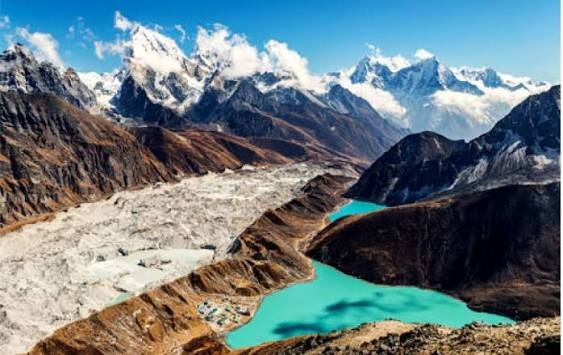
The adventure continues across Cho La Pass into the spectacular Gokyo Valley. Here, you explore the turquoise Gokyo Lakes and climb Gokyo Ri (5,360 m), one of the finest viewpoints in the Everest region. The final major challenge is Renjo La Pass, from where sweeping views of Everest, Makalu, Cho Oyu, and the surrounding Himalayan peaks can be enjoyed.
Descending through the historic Thame Valley, the trail eventually returns to Namche Bazaar and Lukla, completing an extraordinary circuit through the heart of the Khumbu.
This trek is designed for experienced and physically fit adventurers who want more than a standard Everest Base Camp experience. With three high-pass crossings, glacier terrain, remote valleys, Sherpa villages, Buddhist monasteries, Everest Base Camp, Gokyo Lakes, and spectacular Himalayan viewpoints, the Everest Three Passes 19 Days Trek offers an unforgettable combination of adventure, culture, wilderness, and world-class mountain scenery.
With an experienced government-licensed guide, porter support, proper acclimatization, and carefully planned logistics, Apex Himalaya Treks & Expedition provides professional support throughout this demanding Himalayan adventure.
Day-by-Day Itinerary
Detailed breakdown of your trekking journey
Welcome to Nepal! Upon your arrival at Tribhuvan International Airport, our representative will greet you and transfer you to your hotel. You can rest and relax or explore the vibrant streets of Thamel. Overnight at a hotel in Kathmandu.
Today is dedicated to preparation for the Everest Three Passes Trek. You will meet your trekking guide, check your equipment, complete any necessary preparations, and receive a detailed briefing about the route, altitude, weather, safety, and trekking conditions. Overnight at a hotel in Kathmandu.
An early morning scenic flight takes you from Kathmandu or Ramechhap to Lukla. After meeting the trekking crew, we begin walking toward Phakding through beautiful Sherpa villages, pine forests, and along the Dudh Koshi River. Overnight at a teahouse in Phakding.
We follow the Dudh Koshi River through forests and cross several suspension bridges before entering Sagarmatha National Park at Monjo. After crossing the famous Hillary Suspension Bridge, we make a steep climb toward Namche Bazaar. On a clear day, we may enjoy our first views of Mount Everest, Lhotse, and Nuptse. Overnight at a teahouse in Namche Bazaar.
Today is an important acclimatization day. We hike toward Syangboche and the Everest View Hotel for spectacular views of Everest, Ama Dablam, Lhotse, and Thamserku. We may also explore Khumjung Village, visit the monastery and Hillary School, and enjoy the local markets and cafes in Namche. Overnight at a teahouse in Namche Bazaar.
The trail follows a scenic ridge with magnificent views of Everest, Ama Dablam, Lhotse, and Nuptse before descending to the Dudh Koshi River at Phunki Tenga. From there, we climb through beautiful rhododendron and pine forests to Tengboche, home to the famous Tengboche Monastery. Overnight at a teahouse in Tengboche.
We descend through beautiful forests toward Debuche and cross the Imja Khola before climbing toward Pangboche. The landscape gradually becomes more alpine as we gain altitude. We continue through the Imja Valley to Dingboche, surrounded by stone-walled fields and spectacular Himalayan peaks. Overnight at a teahouse in Dingboche.
Another important acclimatization day allows your body to adjust to the increasing altitude. We take a hike toward Nagarjun Hill, offering spectacular views of Lhotse, Makalu, Island Peak, and Ama Dablam. After returning to Dingboche, the afternoon is reserved for rest, hydration, and preparation for the high passes. Overnight at a teahouse in Dingboche.
We follow the scenic Imja Valley toward Chhukung. The landscape becomes increasingly dramatic as we approach the high mountains, with views of Lhotse, Ama Dablam, Island Peak, and surrounding glaciers. Chhukung is an important settlement for trekkers and climbers heading toward Island Peak and Kongma La. Overnight at a teahouse in Chhukung.
We make an early start for the challenging crossing of Kongma La Pass, the first of the three high passes. The trail climbs steeply over rocky and potentially snow-covered terrain. From the top, enjoy spectacular views of glaciers, Makalu, Lhotse, Nuptse, and the Khumbu region. After crossing the pass, we descend through glacial terrain toward Lobuche. Overnight at a teahouse in Lobuche.
Today we trek toward the legendary Everest Base Camp. The trail passes through Gorakshep and continues along the Khumbu Glacier over rocky and uneven terrain. At Everest Base Camp, enjoy views of the Khumbu Icefall and surrounding mountains before returning to Gorakshep for the night. Overnight at a teahouse in Gorakshep.
We make an early morning climb to Kala Patthar for spectacular sunrise views of Mount Everest, Nuptse, Pumori, Lhotse, and the Khumbu Glacier. After descending to Gorakshep for breakfast, we continue toward the quieter and more remote settlement of Dzongla through beautiful alpine landscapes. Overnight at a teahouse in Dzongla.
Today we cross the second major pass, Cho La. The route involves steep and rocky sections and may include snow and ice depending on the season. From the top of the pass, we enjoy breathtaking Himalayan and glacier views before making a careful descent toward Thangnak in the Gokyo Valley. Overnight at a teahouse in Thangnak.
A relatively short and scenic trek takes us toward the beautiful Gokyo Valley. We walk alongside the Ngozumpa Glacier and gradually approach the turquoise Gokyo Lakes. Gokyo is surrounded by spectacular mountains and offers a peaceful Himalayan atmosphere. Overnight at a teahouse in Gokyo.
Early in the morning, we climb Gokyo Ri for one of the finest panoramic viewpoints in the Everest region. From the summit, we can enjoy views of Everest, Lhotse, Makalu, Cho Oyu, and surrounding peaks. After descending to Gokyo, the remainder of the day is available for exploring the lakes, glacier, or relaxing. Overnight at a teahouse in Gokyo.
We leave Gokyo early and climb toward Renjo La, the third and final major high pass of the trek. From the top, enjoy spectacular views of Everest, Lhotse, Makalu, Cho Oyu, and the Gokyo Lakes. We then descend into the remote Bhote Koshi Valley toward Lungdeng. Overnight at a teahouse in Lungdeng.
We descend through the beautiful Bhote Koshi Valley toward the historic Sherpa village of Thame. The trail passes traditional settlements, monasteries, and mountain landscapes before continuing toward Namche Bazaar. After reaching Namche, enjoy a well-deserved rest and celebrate completing all three high passes. Overnight at a teahouse in Namche Bazaar.
Today is the final trekking day. We descend through Monjo, Jorsalle, and Phakding, following the Dudh Koshi River through forests and traditional Sherpa villages. After several hours of walking, we reach Lukla and celebrate the successful completion of the Everest Three Passes adventure with the trekking crew. Overnight at a teahouse in Lukla.
After breakfast, we take an early morning flight from Lukla to Kathmandu or Ramechhap, depending on the season and flight operations. Upon arrival, our representative will assist with your transfer to the airport for your onward journey or to your hotel if you are staying longer in Nepal. This marks the end of your unforgettable Everest Three Passes and Gokyo Trek.
Cost Details
Cost Includes
- Airport pickup and drop-off in Kathmandu.
- Standard hotel accommodation in Kathmandu as mentioned in the itinerary.
- Kathmandu/Ramechhap–Lukla–Kathmandu/Ramechhap domestic flights.
- All necessary trekking permits and entry fees, including Sagarmatha National Park Entry Permit and Khumbu Pasang Lhamu Rural Municipality Permit.
- Experienced, English-speaking, government-licensed trekking guide.
- Porter service — one porter for every 2–3 trekkers.
- Guide and porter salary, meals, accommodation, and insurance.
- Three meals per day — Breakfast, Lunch, and Dinner — during the trek.
- Teahouse/lodge accommodation throughout the trekking period.
- Trekking duffel/kit bag.
- Sleeping bag suitable for cold, high-altitude conditions.
- Comprehensive first-aid and basic medical kit.
- Necessary trekking paperwork and government/local taxes.
- Certificate of appreciation upon successful completion of the trek.
- Farewell dinner in Kathmandu.
Cost Excludes
- International flight tickets.
- Nepal tourist visa fee.
- Travel and medical insurance, including emergency helicopter rescue and evacuation coverage.
- Hotel accommodation and meals in Kathmandu before or after the trek, except those specifically mentioned as included.
- Personal trekking equipment and clothing.
- Personal expenses such as phone calls, laundry, bar bills, battery charging, and shopping.
- Extra porter or additional staff services.
- Bottled/mineral/boiled drinking water and other beverages.
- Hot showers and other paid teahouse services.
- Alcoholic and non-alcoholic beverages.
- Desserts, chocolates, cakes, and other snacks.
- Tips and gratuities for guides, porters, and drivers.
- Any additional expenses caused by weather, flight delays/cancellations, landslides, illness, strikes, government regulations, route changes, or other circumstances beyond the company's control.
- Any other expenses or services not specifically mentioned under Cost Includes.
Payment Terms
Advance Deposit Payment (40%): 40% advance payment is needed to ensure your booking.
Balance (60%): Balance payment has to be made prior to the tour departure date as agreed upon at the time of booking.
Such procedure guarantees your booking while providing an opportunity for additional payment arrangements.
Equipment Lists
- Required Equipment
- Duffel bag/kit bag
- Daypack (30–40 liters)
- Trekking boots with good ankle support
- Camp shoes or comfortable sandals
- Trekking socks and warm woolen socks
- Thermal base-layer tops and bottoms
- Fleece jacket or warm mid-layer
- Down jacket suitable for high-altitude conditions
- Waterproof and windproof jacket
- Waterproof trekking trousers
- Trekking pants
- Warm inner layers
- T-shirts and long-sleeve shirts
- Warm fleece or woolen hat
- Sun hat/cap
- Warm gloves and inner gloves
- Sunglasses with UV protection
- Goggles for snow conditions
- Sunscreen and lip balm with SPF
- Headlamp with spare batteries
- Trekking poles
- Sleeping bag suitable for temperatures around -20°C to -25°C
- Water bottles or hydration bladder (2–3 liters)
- Water purification tablets/filter
- Personal first-aid kit and medications
- Toiletries and quick-drying towel
- Hand sanitizer and wet wipes
- Power bank and charging cables
- Camera/phone and spare batteries
- Passport and copies of travel documents
- Travel insurance documents
- Small personal snacks/energy bars
Note:
Duffel bag: A trekking kit/duffel bag is provided for carrying your main belongings. Your porter will carry the duffel bag during the trek. Daypack: Carry your daily essentials, including water, snacks, camera, documents, sunscreen, gloves, and extra layers. Sleeping bag: A sleeping bag is provided for the trek and is suitable for very cold high-altitude conditions. Bringing a personal sleeping bag liner is recommended for hygiene and additional warmth. Down jacket: A warm down jacket is essential because temperatures can drop significantly at the high passes and during early-morning starts. Trekking boots: Waterproof, well-broken-in boots with good ankle support are strongly recommended. Trekking poles: Highly recommended for steep ascents, descents, rocky terrain, and snow-covered sections of the three high passes. Glacier/high-pass equipment: Kongma La, Cho La, and Renjo La may have snow and ice depending on the season. Your guide will assess conditions and advise whether additional equipment is required. Water: Carry at least 2–3 liters of reusable water capacity. Drinking water, bottled water, and water treatment costs are not included. Electronics: Bring a power bank because charging facilities are limited and usually available for an additional fee at teahouses. Clothing: Use a layering system so you can easily adjust your clothing as temperatures change. Documents: Keep your passport, permits, insurance policy, emergency contacts, and other important documents safely stored. Luggage: Keep valuable items and essential documents in your daypack rather than in the porter-carried duffel. High-altitude preparation: The trek reaches above 5,500 m, so proper acclimatization, hydration, and suitable cold-weather equipment are essential. Travel light: Bring only essential items. Your porter has a limited carrying capacity, and the trek involves several challenging high-altitude crossings.
Additional Information
Best Season
The best seasons for the Everest Three Passes 19 Days Trek are spring (March–May) and autumn (September–November). These periods generally provide stable weather, clear skies, excellent mountain visibility, and safer conditions for crossing the high passes. Spring (March–May): Mild temperatures, clear mountain views, and blooming rhododendrons. Autumn (September–November): Stable weather, clear skies, excellent visibility, and dry trails. Winter (December–February): Possible for experienced trekkers, but heavy snowfall, freezing temperatures, and difficult high-pass conditions can make the trek considerably more challenging. Monsoon (June–August): Generally not recommended because of rain, clouds, slippery trails, landslides, and possible flight disruptions.
Required Fitness Level
The Everest Three Passes 19 Days Trek is classified as Difficult and requires a high level of physical fitness and good endurance. You should be prepared to walk approximately 5–9 hours per day over steep, rocky, uneven, and sometimes snow-covered terrain. The trek crosses Kongma La (5,540 m), Cho La (5,420 m), and Renjo La (5,360 m) and also includes Everest Base Camp, Kala Patthar, and Gokyo Ri. Previous high-altitude trekking experience is strongly recommended. Regular cardiovascular training, hiking, stair climbing, and strength training several weeks or months before the trek will help with preparation.
Visa Information
For this 19-day itinerary, a 30-day tourist visa is generally the most convenient option because the trip exceeds 15 days.
Visa requirements and fees can vary by nationality and may change, so travelers should verify the latest requirements before traveling to Nepal.
Travel Insurance
Your insurance should specifically cover:
High-altitude trekking above 5,500 m.
Emergency medical treatment.
Hospitalization.
Emergency helicopter evacuation.
Trek cancellation or interruption.
Flight delays/cancellations where applicable.
Loss, theft, or damage of baggage and personal belongings.
Make sure your insurance provider confirms in writing that high-altitude trekking and emergency helicopter evacuation are covered under your policy.
Important Notes
The highest point of the itinerary is approximately 5,545 m at Kala Patthar, while the highest trekking pass is Kongma La at approximately 5,540 m.
The trek crosses three major high passes: Kongma La, Cho La, and Renjo La.
Weather conditions can change rapidly at high elevations, particularly around the passes.
High passes may contain snow and ice depending on the season. Your guide will assess the conditions and determine the safest route.
Lukla flights are highly dependent on weather and operational conditions and may be delayed or cancelled.
During peak seasons, flights may operate between Ramechhap and Lukla instead of Kathmandu and Lukla.
Keep some flexibility in your schedule in case of flight delays caused by weather or other operational circumstances.
Altitude sickness can affect anyone regardless of age or physical fitness. Inform your guide immediately if you experience headache, dizziness, nausea, unusual fatigue, difficulty sleeping, or breathing problems.
Do not ascend further if you are experiencing significant symptoms of altitude sickness without consulting your guide.
Stay hydrated and maintain a steady, comfortable walking pace.
Follow your guide's instructions throughout the high-pass sections.
Respect local Sherpa culture, monasteries, traditions, wildlife, and the natural environment.
Follow Leave No Trace principles and avoid unnecessary plastic waste.
Carry your passport, permits, travel insurance documents, and emergency contact information safely.
Accommodation is generally in basic local teahouses/lodges, particularly in remote areas.
Hot showers, charging facilities, Wi-Fi, and other additional services may be available at an extra cost.
Tipping for guides and porters is customary and appreciated.
The itinerary may be modified when necessary due to weather, trail conditions, health, safety, government regulations, or other unforeseen circumstances.
Frequently Asked Questions
Trip Summary
Need Help?
Have questions about this trip? Our team is here to help!
Join Our Adventure Community
Subscribe to the Apex Himalaya newsletter for exclusive travel tips, new trek announcements, special offers, and inspiring stories from the world's highest peaks.
Your privacy matters to us. We never share your information with third parties and keep all data secure. You can unsubscribe from our newsletter anytime with just one click. View our privacy policy.
We are Affiliated with


